Haringey Council permits for removal vans explained
Posted on 22/06/2026
If you are moving in or out of Haringey, the permit question can sneak up on you fast. One minute you are thinking about boxes, tape, and whether the sofa will fit through the hallway; the next, you are wondering if your removal van can legally stop outside the property at all. That is exactly why this guide to Haringey Council permits for removal vans explained matters. It cuts through the confusion and helps you understand when a permit is needed, how it usually works, and how to avoid the kind of last-minute parking headache that can throw an otherwise decent moving day off balance.
Truth be told, the permit issue is less about paperwork for the sake of it and more about protecting your move from delays, fines, and unnecessary stress. And yes, in London that really can make the difference between a smooth handover and a very long afternoon staring at hazard lights.
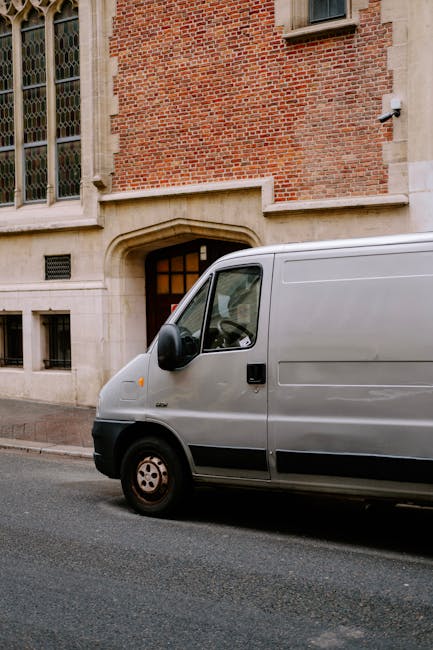
Why Haringey Council permits for removal vans explained Matters
Removal vans are not like a quick supermarket stop. They often need space, time, and fairly direct access to the front of a property. In Haringey, that matters because streets can be tight, busy, and heavily used by residents, tradespeople, and delivery vehicles. A permit may be needed if the van is going to park in a controlled bay, on a restricted street, or in a space that is normally managed by the council.
For movers, this is not just a technical detail. It affects whether the vehicle can park close enough for loading, how long it can stay, and whether a suspension or temporary restriction needs to be considered. If you ignore it, you could end up unloading from too far away, juggling boxes down the road, or paying avoidable penalties. Not ideal, especially if you are moving a wardrobe down a staircase at 8 a.m. and the lift has decided to have a day off.
There is also a wider practical point. A properly planned parking arrangement makes the move safer for everyone. Fewer repeated trips across traffic, less pressure on the crew, and less chance of hurried lifting. If you want a bit more background on moving safely, it is worth reading about the principles behind kinetic lifting. It is not glamorous, but it is genuinely useful.
Expert summary: the permit question is really a planning question. Sort the parking, and half the move becomes easier.
How Haringey Council permits for removal vans explained Works
In simple terms, a permit is authorisation to use a road space in a way that would otherwise be restricted. The exact arrangement depends on the street, the bay type, the time of day, and whether you need the van to stop briefly for loading or sit there for a more substantial period. Sometimes the issue is an ordinary parking bay. Sometimes it is a loading restriction. Sometimes it is a suspended bay. The detail matters.
Most people start by checking whether the property is on a controlled street or within a permit-controlled parking zone. If it is, you then look at whether a short loading window is allowed without a permit, or whether advance permission is needed for the removal van. The council side of it is usually about managing road space, preventing obstruction, and keeping traffic moving. Your side of it is making sure the van can legally and safely get close to the door.
In practice, the process often involves identifying the date and time of the move, the van size, the exact street location, and whether any special arrangements are needed. If you are also dealing with bulky household items, it helps to plan the order of loading carefully. A good move is not just "get stuff into van"; it is "get the right stuff out first, in the right sequence, without crushing anyone's toes."
For packing efficiency, this is where a guide like expert advice on efficient house packing methods becomes a surprisingly good companion piece.
Key Benefits and Practical Advantages
The obvious benefit is compliance. But there are several more practical gains that people sometimes miss until they have done a few moves the hard way.
- Closer access to the property: Less carrying distance, less fatigue, and a lower chance of damage.
- Reduced delay risk: No endless circling for a legal space on a busy road.
- Better crew efficiency: The team can work steadily instead of rushing between the van and the front door.
- Improved safety: Less pressure on awkward lifting and fewer improvised handovers at kerbside.
- Cleaner timeline: More predictable arrival, loading, and departure times.
There is also a confidence benefit. Once the parking side is under control, the rest of the move feels more manageable. Packing may still be a faff, and the kettle may still end up in the last box you open, but at least the van can park where it needs to.
If your move involves furniture that needs extra handling, take a look at furniture removals Tottenham Hale for a sense of how professional handling and planning fit together in a real move.
Who This Is For and When It Makes Sense
This topic matters to a wider group than many people realise. It is not only for large house moves or full-service removals. You may need to think about permits if you are:
- moving from a flat on a busy street
- using a removal van on a road with controlled parking
- loading from a narrow terrace or a one-way street
- moving furniture into storage
- making a same-day or short-notice move
- working around school-run traffic, market hours, or peak commuter times
It can also matter if you are moving only a few bulky items. A "small" move is not always simple. A bed base, freezer, wardrobe, and chest of drawers can create the same parking problem as a full house move. If you are in that in-between category, a guide to short moves along Tottenham High Road may help you think through the route and access side of things.
Students, landlords, office movers, and first-time buyers all run into this sooner or later. And honestly, it is usually best to treat the permit as part of the move plan, not an optional extra. That way you are not trying to solve it while the back doors are already open.
Step-by-Step Guidance
If you want a simple way to approach the issue, use this sequence. It keeps the moving day much calmer.
- Check the street conditions first. Look at whether the road has bays, loading restrictions, yellow lines, time-limited parking, or signs that limit stopping.
- Confirm the van's stopping point. The exact side of the road matters. A bay on one side does not help if the property is on the opposite side and traffic makes crossing unsafe.
- Estimate the size of the vehicle. A small van and a long-wheelbase removal van may face different space constraints.
- Decide whether loading will be quick or extended. A couple of boxes is one thing; a full flat with sofas, mattresses, and kitchen items is another.
- Build the permit into the booking window. Do not leave it until the night before, unless you enjoy unnecessary tension.
- Prepare the property access. Move cars, clear pathways, and make sure internal doors, lifts, or communal areas are ready.
- Keep documents and contact details handy. If the driver needs to confirm anything on arrival, you do not want to hunt through a bag full of cable ties and receipts.
A good move is often won by small decisions made early. One of those small decisions is preparing your home properly. If you want a useful planning reminder, the article on pre-move-out house cleaning can help you sequence the final day more neatly.
Expert Tips for Better Results
These are the little things that tend to save the most time.
Book the parking plan before you book the van, if possible. Or at least at the same time. A great van with nowhere to stand is not much use.
Think about loading order. Put bulky and fragile items in a sensible sequence so the van is not turned into a puzzle you have to solve with your knee on the tail lift. Sofas, beds, and large appliances should not be an afterthought. If you are moving a sofa or keeping one in storage, tips for preserving your sofa in storage can save you from avoidable wear.
Use the quieter window if you can. Early mornings can be calmer for access, but that depends on the street and the neighbours. Sometimes 7:30 a.m. is the sweet spot; sometimes it is just a time when everyone's bins are out and the road narrows even more. You know how it goes.
Plan for awkward items separately. Piano, freezer, large wardrobe, heavy bookcase - each of these can change the access plan. If a piano is involved, it is worth reading why you should avoid moving a piano solo. Some jobs really are not worth improvising.
Leave buffer time. A permit issue, a blocked bay, or a delivery truck in the wrong place can add thirty minutes without much effort. Buffer time is boring. Buffer time is also brilliant.

Common Mistakes to Avoid
Most problems come from a handful of predictable mistakes. Once you know them, they are easier to dodge.
- Assuming loading is always allowed: It is not safe to assume. A short stop may be fine in some places and not in others.
- Forgetting to match the permit to the vehicle size: A van that is too large for the space can create chaos even with permission.
- Leaving it too late: The worst time to discover a restriction is when the team is already outside the property.
- Ignoring bay suspensions or temporary changes: Street works, cleaning, events, and local disruptions can change the picture quickly.
- Not communicating with the driver or removals team: Everyone should know the parking plan before the van arrives.
- Underestimating distance to the property: A few extra metres becomes a lot when you are carrying boxes ten or twenty times.
One more subtle mistake: overpacking the van because you had to park further away than expected. It sounds efficient on paper, but it can turn into bent box corners, strained backs, and a slightly grumpy crew by lunchtime. Nobody needs that.
Tools, Resources and Recommendations
You do not need a giant toolkit to manage this well. You need a sensible checklist, clear measurements, and the right packing materials.
Useful things to have ready:
- postcode and exact street name
- arrival and loading window
- vehicle dimensions or van type
- photos of the frontage, bay, or access point
- floor number and lift details for flats
- a copy of any building access instructions
- boxes, tape, labels, and protective wrapping
For the packing side, the service page on packing and boxes in Tottenham Hale is a sensible place to understand how good materials support a smoother move. And if you are trying to reduce load before moving day, the article on decluttering for a stress-free move is worth your time. Fewer unnecessary items usually means less parking pressure and less unloading time. Simple, really.
Practical recommendation: keep one person responsible for access, one for packing status, and one for communication with the mover. Even in a small household, a tiny bit of role clarity helps. Otherwise everybody thinks somebody else has handled the parking. Classic.
Law, Compliance, Standards, or Best Practice
There is no reason to make this more dramatic than it is, but it does touch on public highway use, parking restrictions, and road safety. The exact rules depend on the street and the council's current arrangements, so the safest approach is to treat the local parking conditions as something to verify before the move rather than on the day. That is the practical standard that experienced movers tend to follow.
From a best-practice perspective, the aim is straightforward: do not block traffic, do not create unnecessary obstruction, and do not guess. If the street has controlled parking, loading restrictions, or bay suspensions, the move plan needs to reflect that. You should also think about health and safety inside the property. Clear walkways, sensible lifting, and stable stacking are just as important as the street-side arrangements.
For a move handled by a professional team, insurance and planning matter too. It is sensible to work with a provider whose approach to safety is clear, whether that means careful item handling, awareness of access risks, or a structured process for avoiding damage. If you want a broader view of how professional standards sit around a move, you may find the pages on insurance and safety and health and safety policy helpful for context.
And one quick note: if you are ever unsure, it is usually better to plan conservatively. A slightly less convenient parking arrangement is still better than an illegal one.
Options, Methods, or Comparison Table
There are a few common ways people handle removal van parking in Haringey. The right one depends on access, street layout, and how much you are moving.
| Approach | Best for | Pros | Watch-outs |
|---|---|---|---|
| Standard roadside loading | Quiet streets with straightforward access | Simple and usually fast | Not suitable if parking is restricted |
| Permit or formal parking arrangement | Controlled roads and longer loading windows | More reliable and predictable | Needs planning and confirmation |
| Short-stop loading only | Very small moves or quick collections | Less admin if allowed | Too tight for larger household moves |
| Alternative access from a side street | Homes on narrow or busy main roads | Can reduce obstruction and stress | More carrying distance |
For many people, the best option is not the cheapest in theory, but the least disruptive in practice. A van parked legally and sensibly tends to save time, even if it takes a bit more planning.
Case Study or Real-World Example
Here is a realistic scenario. A couple moving out of a first-floor flat in Haringey thought they could rely on a quick roadside stop outside the building. The road looked wide enough in the morning. By mid-afternoon, though, half of it was taken up by resident parking, a delivery van, and a bin collection that was running later than expected. The removal crew still worked efficiently, but they had to park further down the road than planned.
What changed? The carry distance went up, the loading took longer, and the couple started worrying about the clock. Nothing catastrophic, but definitely more stressful than it needed to be. In a second version of the same move, they checked the street rules in advance, arranged the right parking space, and briefed the movers on the exact entrance. The actual lifting was almost the same. The day felt totally different.
That is the part people underestimate. The permit itself is not the whole story. It is the difference between a move that keeps its shape and one that slowly unravels at the edges.
If your move is tied to a local route or a busy corridor, it can also help to read about Tottenham Hale station to Hale Village local removal tips or the more route-focused Meridian Water N17 moves guide. Local road patterns really do shape the day.
Practical Checklist
Use this as a final pre-move sanity check. It is the boring bit that prevents the frantic bit.
- Confirm the move date and arrival time
- Check whether the street has controlled parking or loading restrictions
- Identify the exact place where the van will stop
- Match the vehicle size to the space available
- Notify the removals team of any bay, gate, lift, or access issues
- Clear the path from property to van
- Prepare furniture and fragile items in loading order
- Keep pets, children, and non-essential clutter out of the route
- Have contact numbers ready
- Allow a little buffer time, because life happens
If you want to reduce the amount of stuff moving around on the day, the advice in effortless house moving strategies is a neat companion to this checklist.
Conclusion
Haringey Council permits for removal vans explained, in plain English, comes down to this: do not treat parking as an afterthought. The right permit or parking arrangement can protect your schedule, your back, and your sanity. It can also make the whole move feel more organised, which is a bigger deal than people think on the morning of a relocation.
Take the time to check access, match the vehicle to the street, and build the permit into your plan early. Do that, and the moving day starts to look a lot less like a scramble and a lot more like a proper plan. Not perfect. Just manageable. And that is usually enough.
Get a free quote today and see how much you can save.
Even with all the admin, a move can still feel surprisingly fresh once the first box is in the right room. One steady step at a time, that is how the day gets done.